


Opening day puts every part of a stadium’s visual environment back in the spotlight. Before fans return, teams and venue operators need to make sure their graphics are more than installed—they need to be accurate, on-brand, easy to navigate, sponsor-compliant and ready for heavy traffic.
From the parking lot and entrances to concourses, premium spaces and the seating bowl, a preseason graphics review can help identify outdated branding, worn materials, sponsorship changes and opportunities to improve the fan experience.
For a deeper look at the role the physical environment plays in the fan experience, read The Strategic Role of Stadium Branding in Fan Experience and Athletic Identity.

Preseason Stadium Branding Checklist
Before opening day, review:
- Exterior signage and building graphics
- Parking and arrival signage
- Entrance and gate graphics
- Wayfinding and directional signage
- Concourse graphics
- Sponsorship signage
- Concessions and retail graphics
- Premium clubs and suites
- Seating bowl and field-level graphics
- Locker rooms and player areas
- Safety and informational signage
- Temporary and event-specific graphics
Here’s what to look for in each area.
1. Exterior Stadium Graphics
The fan experience begins before anyone walks through the gates.
Review exterior building graphics, banners, entrance graphics, window graphics, dimensional signage, light pole banners and other large-format graphics.
Look for graphics that are faded, damaged or outdated. Player rosters, campaigns, sponsors and brand standards may have changed since the previous season.
Exterior applications should also be evaluated for weather exposure, durability and the condition of the underlying installation surface.
2. Parking and Arrival Signage
Fans should be able to navigate the venue from the moment they arrive.
Review parking lot signage, pedestrian directions, rideshare locations, VIP entrances, accessible entrances, shuttle areas and other arrival information.
Any operational changes made during the offseason should be reflected in the venue's directional graphics before fans return.
3. Entrances and Gates
Entrances create one of the first major brand impressions on game day.
Review gate identifiers, ticketing graphics, security-area signage, sponsor messaging, promotional graphics and window graphics.
This is also an opportunity to determine whether large-format graphics, dimensional elements or other environmental and experiential graphics could create a stronger sense of arrival.
4. Wayfinding and Directional Graphics
Good stadium graphics aren't only about branding. They also help thousands of people move through a complex environment.
Before opening day, verify that fans can easily locate:
- Sections and seating
- Restrooms
- Concessions
- Team stores
- Guest services
- Elevators and escalators
- Premium clubs and suites
- Accessible routes
- Exits
Instead of replacing individual signs only when problems arise, preseason is a good time to evaluate wayfinding as a complete system.
As discussed in The Strategic Role of Stadium Branding in Fan Experience and Athletic Identity, effective environmental branding can work alongside wayfinding to help improve fan flow and create a more cohesive venue experience.
5. Concourse Graphics
Concourses offer some of the largest opportunities to reinforce team identity throughout a stadium or arena.
Review wall graphics, column wraps, floor graphics, dimensional elements, murals, historical displays and promotional graphics.
Consider whether underused spaces could become opportunities for team storytelling, sponsor recognition, photo moments or branded experiences.
6. Sponsorship Graphics
Sponsorship changes can create a significant amount of preseason graphics work.
Verify:
- Current sponsors
- Correct logos and brand standards
- Required sponsor placements
- New sponsorships
- Expired sponsorships
- Naming-rights changes
- Current promotional campaigns
For areas that change frequently, consider graphics systems that make replacements easier. Modular and replaceable graphics can simplify sponsor updates throughout the season without requiring permanent environments to be rebuilt.
BluEdge has experience creating adaptable sports environments where elements need to be installed, removed or changed quickly. For example, see how the team approached the New York Giants x Cadillac Suite at MetLife Stadium, where a branded environment had to be installed and dismantled without permanently altering the suite.
7. Concessions and Retail
Concession and retail environments combine branding with important operational information.
Review concession branding, menu boards, promotional signage, storefront graphics, team stores, sponsor graphics and point-of-purchase materials.
Also confirm that any changes to food vendors, retail partners, pricing or locations are reflected in the graphics fans will see.
8. Premium Clubs, Suites and Hospitality Areas
Premium spaces often require a different level of finish than general concourse environments.
Review wallcoverings, dimensional graphics, donor recognition, sponsor branding, decorative elements and temporary hospitality graphics.
Material selection is especially important in these spaces, where graphics may need to complement interior finishes while maintaining the venue's overall brand.
For more on how materials affect appearance, performance and fabrication, read A Designer’s Guide to Choosing the Right Materials (Through the Lens of Real-World Fabrication).
9. Seating Bowl and Field-Level Graphics
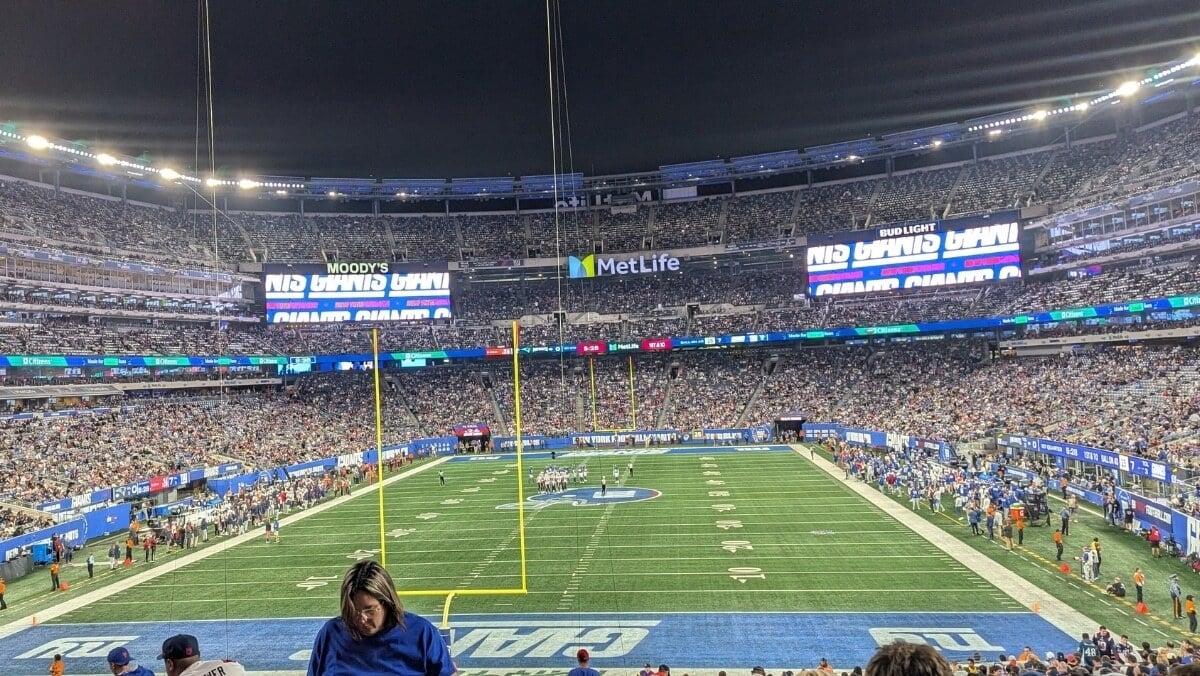
Some of the stadium's most visible graphics are located around the seating bowl and playing surface.
Review tunnel graphics, fascia graphics, field-level signage, rail graphics, banners, sponsor placements and other high-visibility elements.
Consider visibility from more than one perspective. Graphics may be viewed from the stands, but they can also appear in broadcasts, photography, social media and team-produced content.
BluEdge's Stadium & Arena Branding services include graphics and branded environments across concourses, premium spaces, field-level areas, team spaces and other venue touchpoints.
10. Locker Rooms and Player Areas
Branding doesn't stop where public areas end.
Locker rooms, player tunnels, training areas and other team spaces can reinforce team identity through wall graphics, dimensional lettering, historical imagery and motivational graphics.
These environments are also increasingly visible through social media, behind-the-scenes video and other digital content.
11. Safety, Accessibility and Informational Signage
A preseason review should also include functional signage throughout the venue.
Make sure important informational, accessibility and safety signage is current, readable and appropriately located, particularly if operational changes or renovations occurred during the offseason.
12. Temporary and Opening Day Graphics
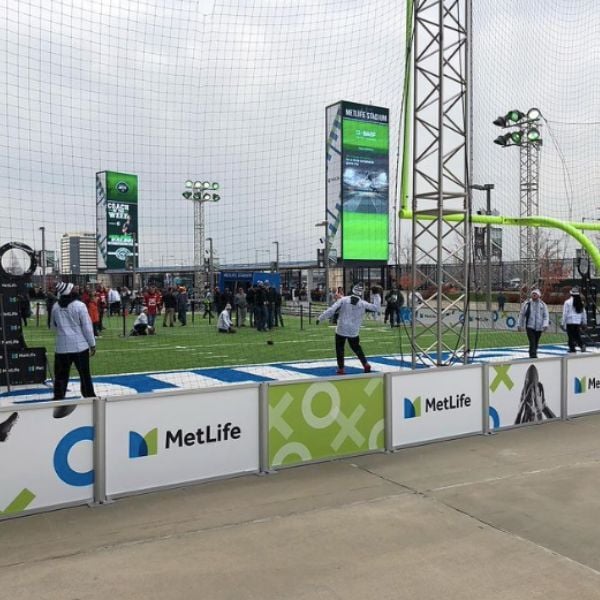
Not every stadium graphic needs to be permanent.
Opening day may require additional graphics for:
- Special promotions
- Sponsor activations
- Photo opportunities
- Temporary wayfinding
- Giveaways
- VIP experiences
- Media areas
- Special events
Identifying these needs early can help prevent last-minute production and installation challenges.
For an example of what fast-turn environmental graphics production can involve, see how BluEdge delivered large-scale event graphics and environmental branding for Univision on a five-day production timeline.
When Should You Start Planning Stadium Graphics?
There isn't one timeline that works for every venue or project. A replacement banner and a venue-wide graphics refresh have very different production requirements.
A typical planning process should include:
Early Planning: Audit existing graphics, identify sponsor and branding changes, and establish priorities.
Design Development: Finalize creative, dimensions, materials and installation requirements.
Production Planning: Confirm substrates, quantities, site access and installation sequencing.
Installation: Coordinate installation around venue operations, construction schedules and other contractors.
Final Walkthrough: Inspect completed graphics, verify sponsor and brand accuracy, and identify any last-minute needs.
The larger and more complex the graphics package, the earlier teams should begin the process.
Experience From the Field
Large-scale stadium branding requires more than printing. File management, color consistency, custom fabrication, packaging, logistics, installation sequencing and on-site coordination all need to work together to get a venue ready on schedule.
BluEdge has supported complex sports venue branding projects that bring many of these capabilities together.
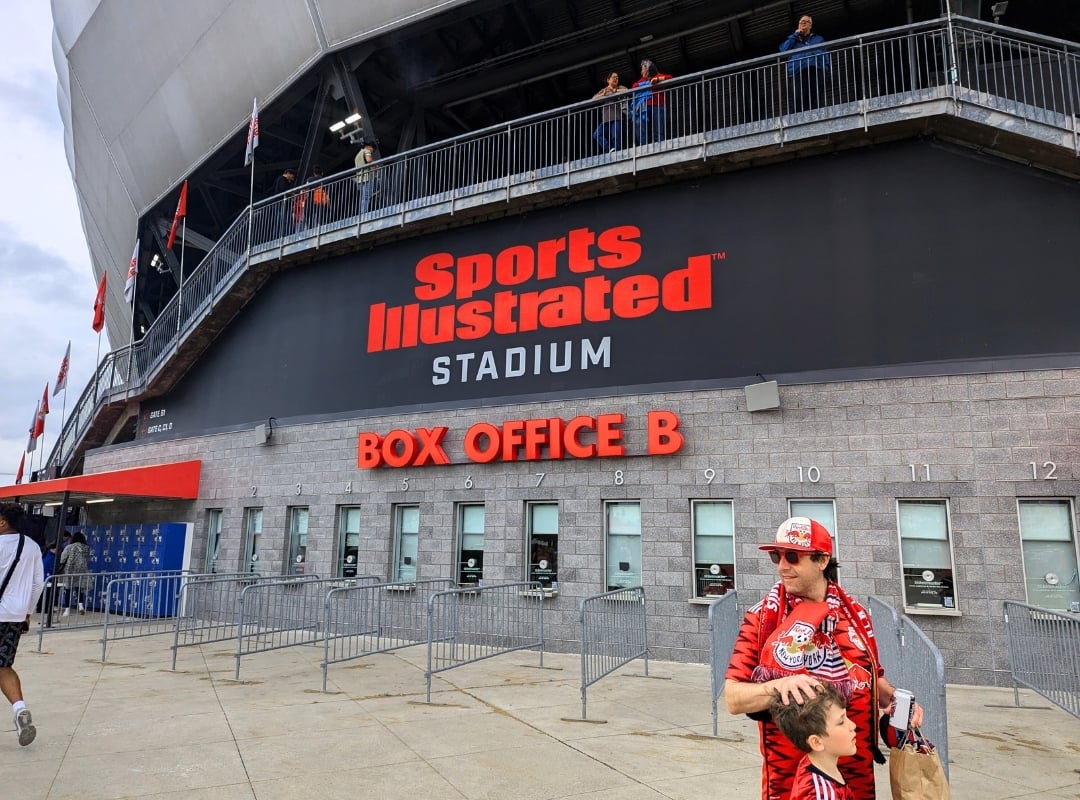
At Sports Illustrated Stadium, home of the New York Red Bulls, BluEdge helped execute a comprehensive environmental graphics program that included 97 custom elements, 75 framed Sports Illustrated covers and a 90-foot exterior wrap.
The project also incorporated custom textile wallcoverings, mesh banners, window films, dimensional signage, branded vendor carts and photo opportunities throughout the venue.
Read the full case study: Bringing Sports Illustrated Stadium to Life for the New York Red Bulls.
Projects like these demonstrate why planning the entire graphics environment—and coordinating production, fabrication and installation as part of one process—can be critical when working toward a fixed opening date.
Stadium Branding FAQs
What stadium graphics should be updated before opening day?
Venue teams should review exterior graphics, entrances, wayfinding, concourses, sponsor signage, concessions, retail areas, premium spaces, seating areas, player areas and temporary promotional graphics. Sponsor logos, directional information and venue branding should also be checked for accuracy.
What types of graphics are commonly used in stadiums and arenas?
Common applications include wall graphics, banners, window graphics, floor graphics, dimensional lettering, wayfinding signage, sponsor signage, column wraps, exterior wraps, SEG fabric graphics and custom-fabricated branded elements.
Learn more about BluEdge's stadium and arena branding capabilities.
How far in advance should stadium graphics be planned?
Planning should allow enough time for site surveys, creative approvals, material selection, production and installation. Large graphics packages, custom fabrication and complex installations generally require more lead time than simple replacement graphics.
How often should stadium graphics be updated?
It depends on the application. Permanent team and wayfinding graphics may remain in place for years, while sponsor, promotional and event graphics may change seasonally or even between events.
Can stadium graphics be changed during the season?
Yes. Designing certain areas with replaceable or modular graphic systems can make sponsor, promotional and event-specific updates easier throughout the season.
What should be considered when choosing materials for stadium graphics?
Consider whether the application is indoors or outdoors, expected lifespan, exposure to weather and sunlight, installation surface, traffic levels, required finish and how frequently the graphic may need to be replaced.
Getting Your Venue Ready for Opening Day?
Whether you're planning a targeted graphics refresh or a venue-wide rollout, BluEdge brings together large-format graphics, environmental graphics and experiential marketing, custom fabrication, project management, logistics and installation to help sports venues move from concept through installation.
Explore our stadium and arena branding services or view more BluEdge sports and experiential work.
.jpg)

