
Sustainability in retail print rollouts isn’t about adding expense—it’s about designing smarter systems from the start. When approached strategically, sustainable decisions often improve efficiency, reduce waste, and eliminate unnecessary spending.
1. Start with Materials That Work Harder
Material selection is one of the most immediate ways to reduce environmental impact without affecting performance. Today’s substrates include PVC-free wallcoverings, recyclable boards, and fabrics made with recycled content—many of which perform just as well (or better) than traditional options.
The key is choosing materials that align with the use case. For short-term campaigns, lightweight, recyclable options may be ideal. For longer-term installs, more durable materials reduce the need for frequent reprints and replacements. In both cases, the goal is the same: match material lifespan to campaign lifespan to avoid unnecessary waste.
2. Design Once, Refresh Often
One of the biggest opportunities in retail rollouts is designing for reuse.
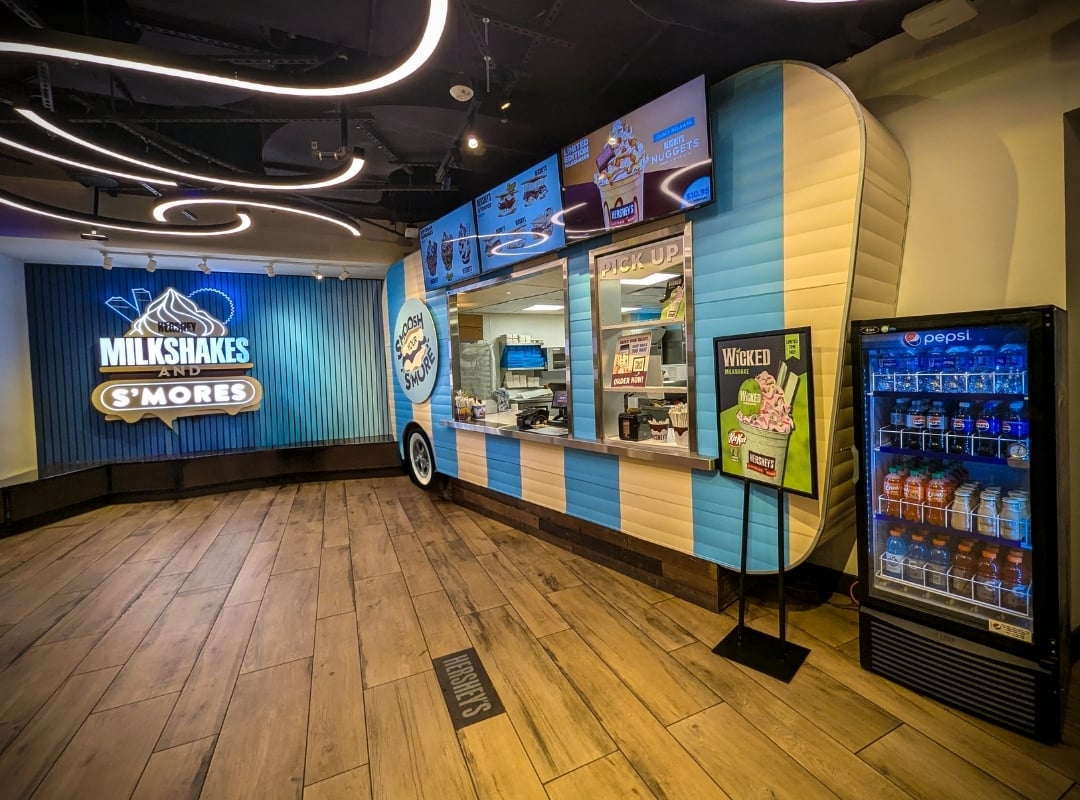
Instead of replacing entire displays each campaign, brands can shift to modular systems—frames, structures, or hardware that remain in place while only the graphic elements are swapped out. Interchangeable graphics (like SEG fabrics, magnetic panels, or dye-sub prints) allow teams to update messaging without starting from scratch.
This approach:
- Reduces material consumption
- Lowers production and shipping costs over time
- Speeds up installation and refresh cycles
Sustainability here isn’t a tradeoff—it’s a more efficient operating model.
3. Produce Closer to Where It’s Needed
Shipping is often an overlooked contributor to both cost and environmental impact.
By leveraging distributed or local production, retail brands can significantly reduce freight distances, emissions, and the risk of delays. Producing closer to the final destination also enables faster turnarounds and more flexibility when timelines shift.
For national rollouts, this doesn’t mean sacrificing consistency—it means working within a controlled production network that maintains standards while optimizing logistics.
4. Reduce Overproduction with Smarter Planning
Overproduction is one of the most common—and avoidable—sources of waste in retail print programs.
Instead of printing large quantities “just in case,” brands can move toward:
- Phased production aligned with rollout schedules
- On-demand reprints for replenishment
- More accurate forecasting based on historical campaign data
This reduces excess inventory, minimizes outdated materials, and keeps budgets aligned with actual needs.
5. Improve Efficiency Through Better Processes
Sustainability isn’t just about what you produce—it’s about how you manage it.
Clear version control, centralized approvals, and structured workflows help ensure that only final, approved assets move into production. This avoids costly (and wasteful) reprints caused by outdated files or miscommunication.
Even small process improvements—like confirming quantities, validating store lists, or documenting shipments—can have a measurable impact when scaled across hundreds of locations.
6. Think Beyond the First Installation
A sustainable rollout doesn’t end when the graphics go up.
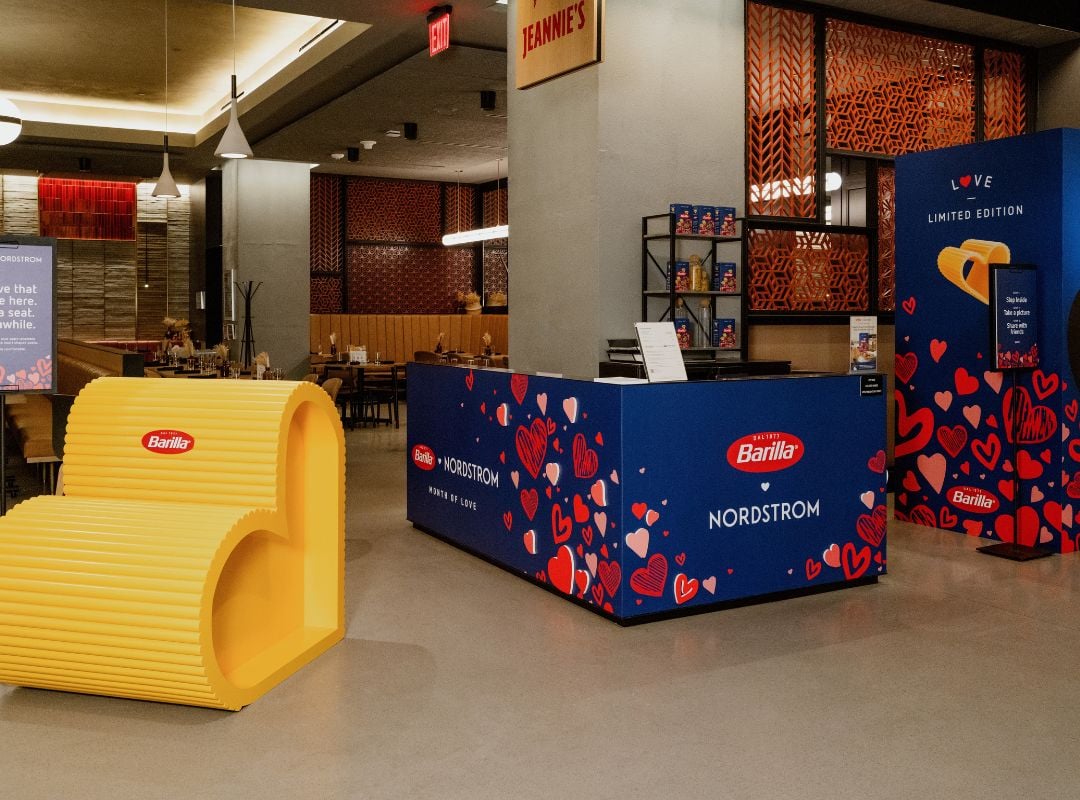
Planning for end-of-life and reuse—whether that’s recycling materials, repurposing components, or designing for future campaigns—helps extend the value of what’s already been produced.
Retail teams that take this longer view often find they’re not only reducing waste, but also getting more mileage out of their investment.
7. The Bottom Line
Sustainability in large-scale retail rollouts isn’t about doing more—it’s about doing things more intentionally.
With the right materials, smarter design strategies, and more efficient production and distribution models, brands can reduce environmental impact while improving speed, consistency, and cost control.
In many cases, the most sustainable approach is simply the one that eliminates unnecessary steps, excess materials, and avoidable rework—creating a rollout process that’s better for both the business and the environment.
-3.jpg)